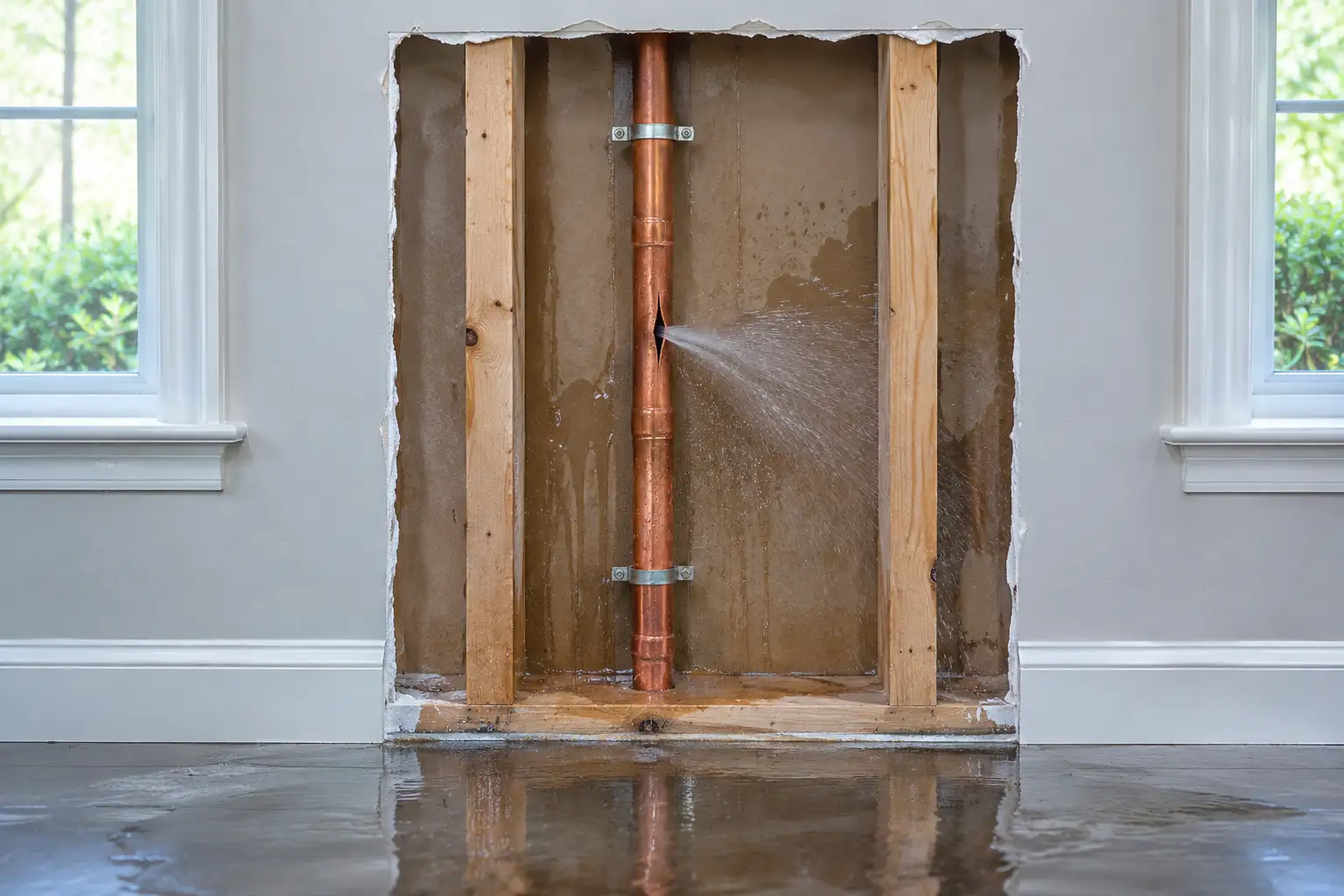
Five minutes that save your floors
A burst pipe in Prescott Valley can put a lot of water into a house quickly. What you do in the first five minutes matters more than anything else.
Close the main valve
Usually where the water line enters the house, often in the garage, a utility closet or near the front hose faucet. Turn a round handle clockwise until it stops, or turn a lever a quarter turn.
Make the power safe
If water is near outlets, lights or appliances, switch those breakers off from a dry spot. If the panel is wet, stay away from it.
Drain the lines
Open the lowest faucet in the house. The water left in the pipes drains out there instead of through the break.
Move what you can
Lift rugs, move electronics and put foil under furniture legs that sit on wet floors.
Take photos
Photograph the break, the water and every wet room before you clean up.
Cannot find the main or it will not turn? The shutoff guide shows where else to look, including the meter box near the street.
Why pipes split in Prescott Valley homes
Cold snaps, big temperature swings and tired fittings
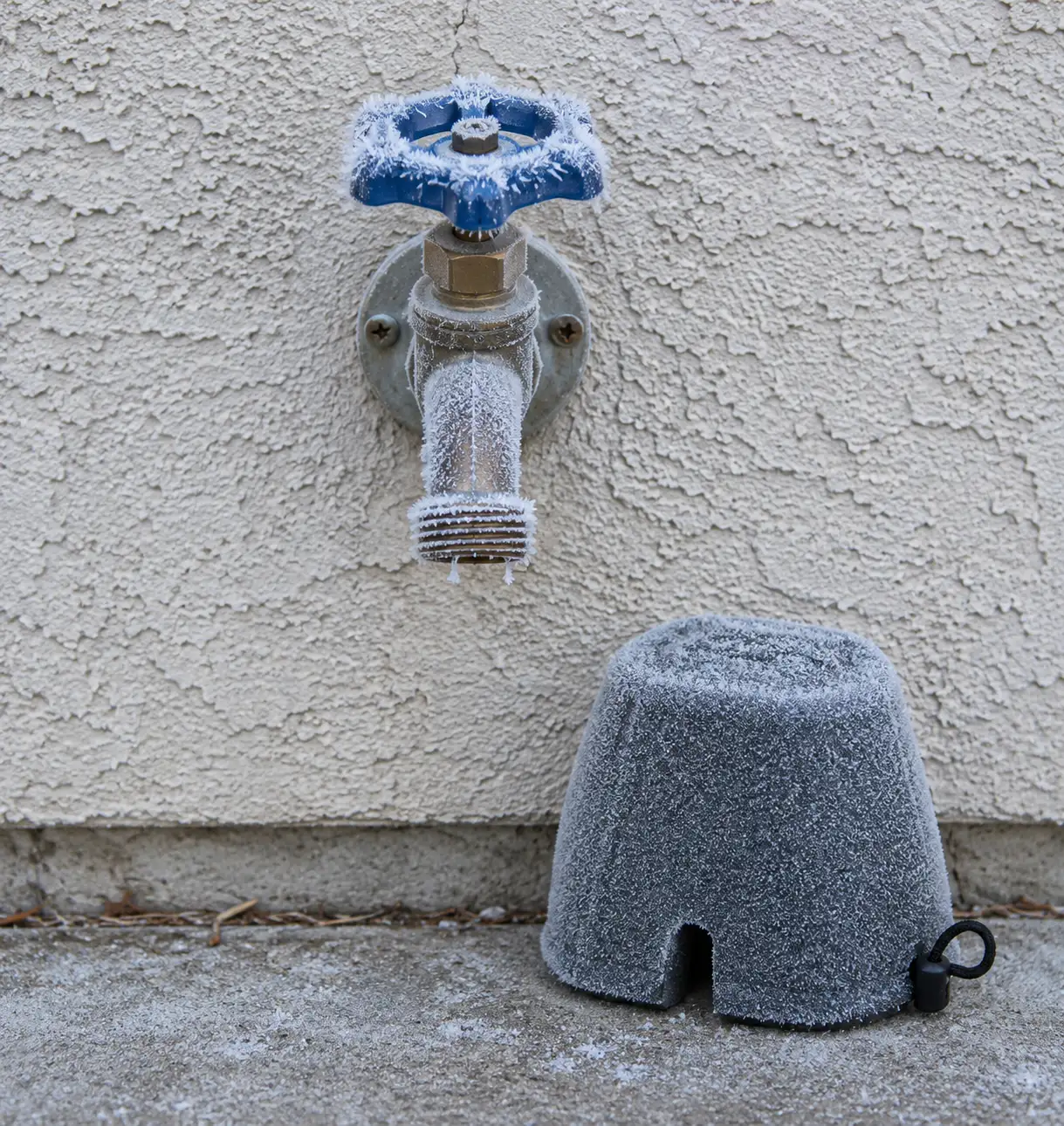
Frozen pipes in cold snaps are a common trigger here. Water expands as it freezes, pressure builds behind the ice and the pipe splits, often where it runs through an outside wall, the garage or the attic.
The split may not leak until the pipe thaws, which is why a burst pipe in Prescott Valley often shows up the afternoon after a cold night.
Other reasons a pipe fails
The large swings between day and night temperatures matter too. Pipes and fittings expand and contract every day, and over the years that movement loosens joints and stresses older connections.
Other causes include corroded fittings, a supply line under a sink that finally gives way, high water pressure and a nail or screw driven into a pipe during a remodel.
How the repair usually goes
Every burst pipe repair in Prescott Valley follows roughly the same path, though the details depend on where the pipe broke, what it is made of and how easy it is to reach. A pipe in an open garage wall is a quicker job than one above a finished ceiling.
Find the break
Sometimes it is obvious. Sometimes the plumber follows the water back through a ceiling or a wall to find it.
Open the area
A small section of drywall comes out so the plumber can reach the pipe and so the cavity can dry.
Repair the line
The split section is cut out and replaced with new pipe and fittings that match the rest of the system.
Test under pressure
The water goes back on slowly, and the repair and the joints on either side are checked for drips.
Once the water is back on, the plumber checks the repair, looks at the pipe on either side of it and runs nearby fixtures to make sure the pressure and flow are back to normal.
You get a clear account of the break and the ways to fix it, and nothing is cut or replaced until you say so. If the line is old and the same kind of break is likely nearby, you will hear that too, along with what a larger repair would involve.
Where a burst pipe hides
Not every split sprays where you can see it. These are the places a broken line can leak quietly for a while, sometimes for days before anyone notices. A slow leak inside a wall or under the floor can do more damage than a dramatic spray, simply because it keeps going unseen.
Inside an outside wall
Paint that bubbles, a damp baseboard or a dark patch near the floor.
In the attic
A ceiling stain that grows after a cold night, or water dripping from a light fixture.
In the garage
Water pooling along the wall where the supply line runs to the house.
Under a sink
A swollen cabinet floor or a musty smell when you open the door.
Under the slab
A warm spot on the floor, the sound of running water or a meter that never stops.
At the hose faucet
Water running down the outside wall when the outdoor faucet is turned on.
If you suspect a leak you can not see, the leak detection page explains how plumbers find it without tearing up the house.
Copper, PEX and older pipes
The type of pipe in your home affects how it fails and how it is repaired.
| Pipe | How it usually fails | Usual repair |
|---|---|---|
| Copper | Splits when frozen, pinhole leaks from corrosion | Cut out the damaged section and join new copper |
| PEX | Rarely splits, but fittings can leak or loosen | Replace the fitting or the section with new PEX |
| Galvanized steel | Rusts from the inside until it leaks or clogs | Replace the section, and often plan wider repiping |
| CPVC | Becomes brittle with age and can crack | Replace the cracked section carefully |
If more than one section has failed, or the pipes are galvanized and rusting, ask about repiping. Repeated repairs on worn pipe tend to keep coming.
After the repair, dry what got wet
Fixing the pipe stops new water. It does not dry the water that already soaked into drywall, insulation and flooring. In a dry climate it is tempting to assume it will dry by itself, but water trapped inside a wall cavity or under flooring can stay there much longer than the room air suggests.
- Keep the wall open until the cavity is dry.
- Run fans and a dehumidifier in the room for a few days.
- Pull up wet rugs and lift wet carpet pad if it soaked through.
- Watch for a musty smell in the days after, a sign water is still trapped.
- Keep photos and notes for your insurance company.
If a lot of water reached the floors or a ceiling below, a water damage drying company may be needed as well as the plumbing repair.
Temporary fixes that buy you time
Sometimes a full repair has to wait for a part or for the wall to be opened. These stopgaps keep the water off in the meantime.
Safe stopgaps
- Closing the valve for that branch, if your house has one.
- A pipe repair clamp over a small split, fitted firmly.
- Self fusing repair tape wrapped tightly over a pinhole.
- Leaving the main closed and using bottled water overnight.
Not worth trying
- Duct tape or plastic wrap over a split.
- Heating a frozen pipe with an open flame.
- Turning the main back on to check if it stopped.
- Closing the wall up before it has dried.
A clamp or tape is a stopgap, not a repair. Treat it as a way to get through the night and have the section replaced properly.
Photos, notes and your insurance company
Many homeowners call their insurance company the same day as the plumber. Whether a burst pipe is covered depends on your policy, and many policies treat a sudden burst differently from a slow leak that built up over time.
- Photograph the break before it is repaired, and keep the old section of pipe if you can.
- Photograph every wet room, the ceiling below and damaged belongings.
- Write down when you found the water and what you did about it.
- Keep the plumber invoice and any notes about the cause.
- Ask whether drying records will be needed if the floors or walls got wet.
Most policies also expect you to stop further damage once you know about it, which is one more reason to close the main and start drying straight away.
Keeping the next one from happening
Most burst pipes are preventable. A few habits, timed to the weather, take care of the most common causes in Prescott Valley homes.
Before a cold snap
Disconnect hoses, cover outdoor faucets and keep the heat on, even when you are away.
On the coldest nights
Let a faucet on an outside wall drip and open cabinet doors under sinks.
Once a year
Check that the main valve turns and look under sinks for corroded fittings.
If pressure seems high
Ask a plumber to check it. Very high water pressure strains every joint.
If a pipe has frozen before, it is likely to freeze again in the same spot. Insulating that run, sealing the gap that lets cold air reach it or having a plumber reroute it inside the warm part of the house solves the problem for good, rather than one cold night at a time.
Burst pipe questions
A pipe just burst. Where do I start?
Close the main water valve, switch off the power to any wet rooms if it is safe, and open the lowest faucet to drain the lines. Then move belongings out of the water.
Why did the leak start once the cold night was over?
Pipes often split while frozen, but the water only escapes once the ice thaws. That is why leaks show up the day after a cold night.
Can I use the rest of the water in my house?
Not until the break is repaired or isolated. A plumber can sometimes close off just the broken branch so the rest of the house has water again.
Will the wall need to be opened?
Usually a small section, so the plumber can reach the pipe and the cavity can dry. It is patched once everything is dry.
Is a burst pipe covered by home insurance?
Many policies treat a sudden burst differently from a slow leak. Check your policy or ask your agent, and keep photos of everything.
How can I tell where the pipe burst if I cannot see it?
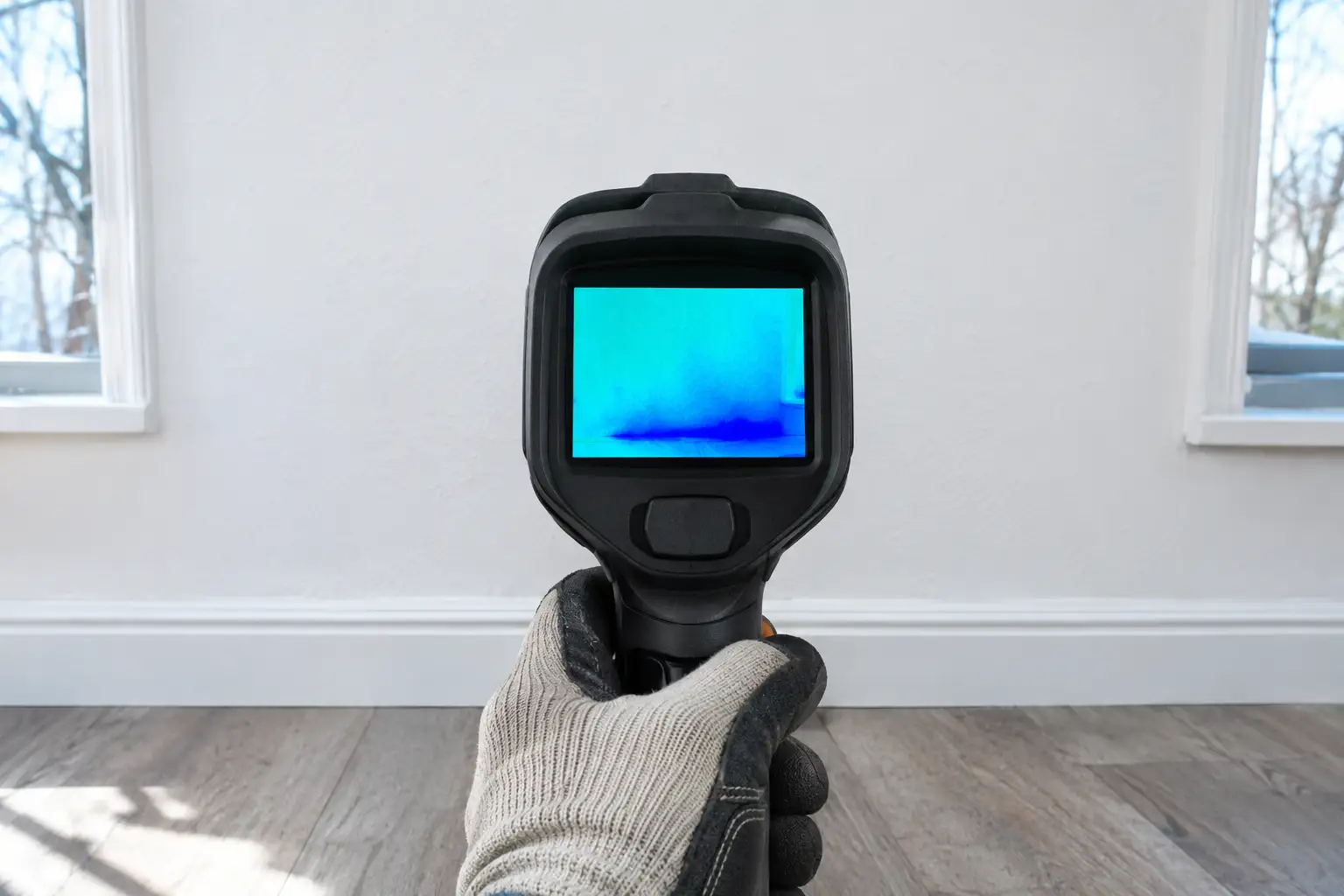
Follow the water. Stains, damp drywall and the sound of running water point toward the break, and a plumber can use meters or a thermal camera to confirm it.
How long does a burst pipe repair take?
A single split on an easy to reach pipe is often repaired in one visit. A break inside a finished wall or ceiling takes longer, because the area has to be opened and patched once it dries.
Do I need a plumber if the leak stopped on its own?
Yes. A pipe that stopped leaking after you closed the main is still broken, and it will leak again as soon as the water goes back on. It needs a proper repair before the main is opened.
Can a burst pipe cause mold?
Yes, if wet drywall, insulation or flooring stays damp for more than a day or two. Drying the area quickly after the repair is the best way to prevent it.
Why does the pipe keep bursting in the same place?
Usually because it runs through a cold spot such as an outside wall or the attic, or because that section of pipe is worn. Insulating it or rerouting it can solve the problem for good.
Should I turn the water heater off too?
If you have closed the main for a long time, turn the water heater to vacation or off so it does not run without water coming in.
Other repairs a burst pipe can lead to
Prescott Valley Plumber takes calls about a burst pipe in Prescott Valley from homes across the 86314 and 86315 ZIP codes. Tell us where the water is and a local plumber can come out.