The two minute meter test
Leak detection in Prescott Valley often starts with a test you can do yourself, before anyone opens a wall.
Turn everything off
Every faucet, the dishwasher, the washer, the ice maker and any irrigation.
Find the water meter
Usually in a box near the street. Lift the lid carefully.
Watch the dial
Look for the small leak indicator, often a triangle or a wheel. Watch it for two minutes.
Read what it means
If it moves while everything is off, water is leaking somewhere on your side of the meter.
Close the main shutoff at the house and look again. If the meter stops, the leak is inside the house. If it keeps moving, the leak may be in the line between the meter and the house.
Slab leaks, explained
A leak in a pipe under the concrete floor
Many homes are built on concrete slabs, with water lines running beneath them. When one of those lines leaks, the water goes into the soil under the house instead of onto the floor.
A hot water line leaking under the slab often warms the floor above it. You may notice a warm spot on tile, hear water running when everything is off or see the meter move.
How slab leaks are repaired
Slab leaks are repaired in a few ways. A plumber may open the floor at the leak and repair that spot, reroute the line through the walls or attic so it no longer runs under the slab, or, if the pipes are failing in several places, recommend repiping. Our guide to signs of a slab leak goes into the warning signs in more detail.
How plumbers find a leak without guesswork
Opening walls at random is the wrong way to find a leak. Proper leak detection narrows it down before anything is cut, so the repair is as small and as tidy as it can be. These are the tools plumbers use to do it.
Pressure testing
Lines are isolated and tested one at a time to find which one is losing water.
Acoustic listening
Sensitive microphones pick up the sound of water escaping through a pipe.
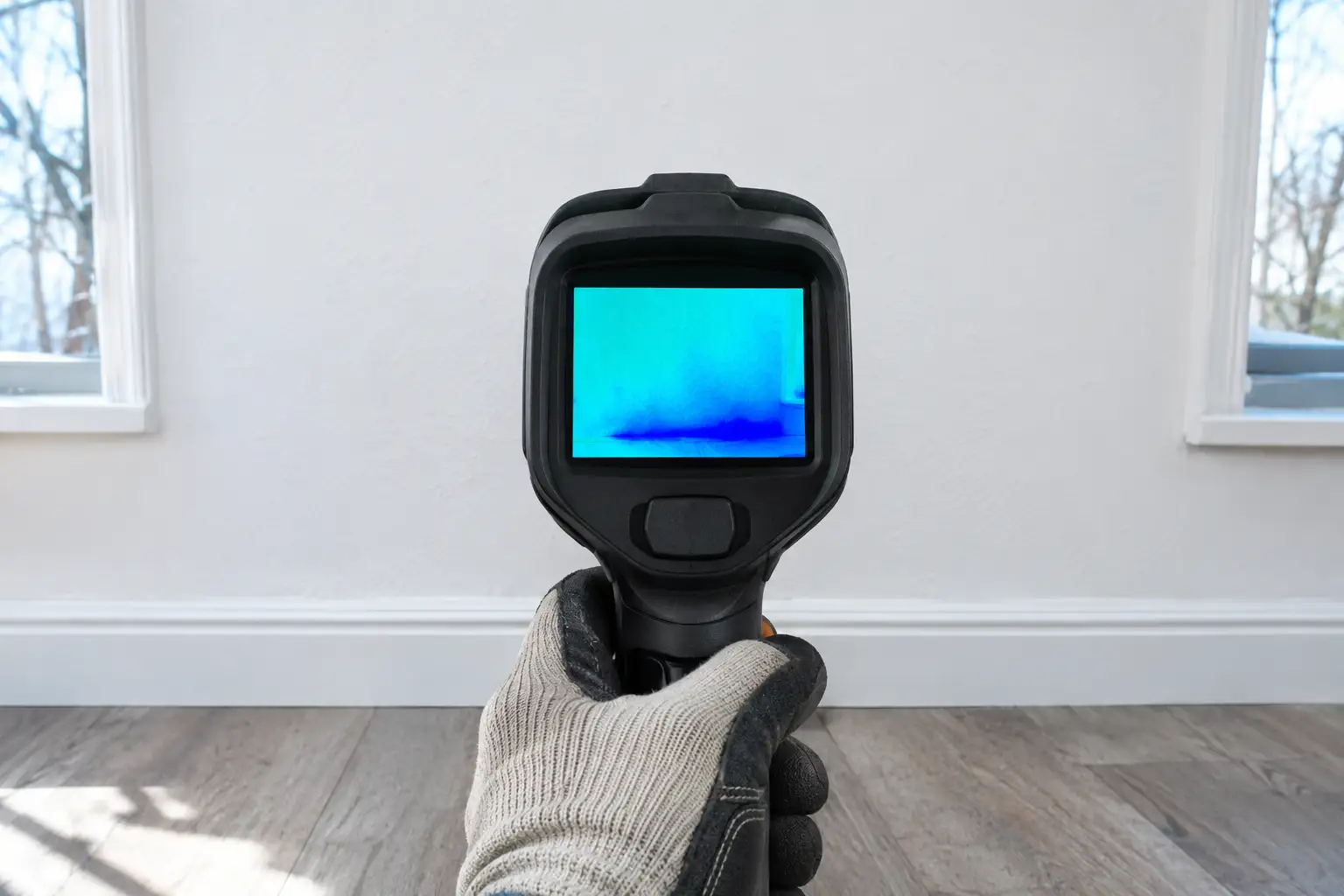
Thermal imaging
A thermal camera shows warm or cool spots where water is moving or soaking in.
Moisture meters
Readings confirm where drywall, flooring or framing has taken on water.
Once the leak is pinned down, you see where it is and hear how it can be repaired. Nothing is opened up until you agree.
Small leaks are worth fixing
A leak you can barely see can soak framing, flooring and insulation for months.
Slow leaks rarely stay slow. They feed mold, rot wood, lift flooring and stain ceilings, and the longer they run the more has to be repaired. In a dry climate a damp patch is easy to dismiss, but a spot that stays damp is a sign that water keeps arriving.
Simple ways to catch leaks early
- Read the water meter once a month at the same time and compare.
- Look under sinks and behind toilets every few months.
- Put a few drops of food coloring in the toilet tank. Color in the bowl without flushing means a leak.
- Fit leak sensors near the water heater, the washer and under sinks.
- Check irrigation lines and valve boxes after each season.
Leaks outside the house
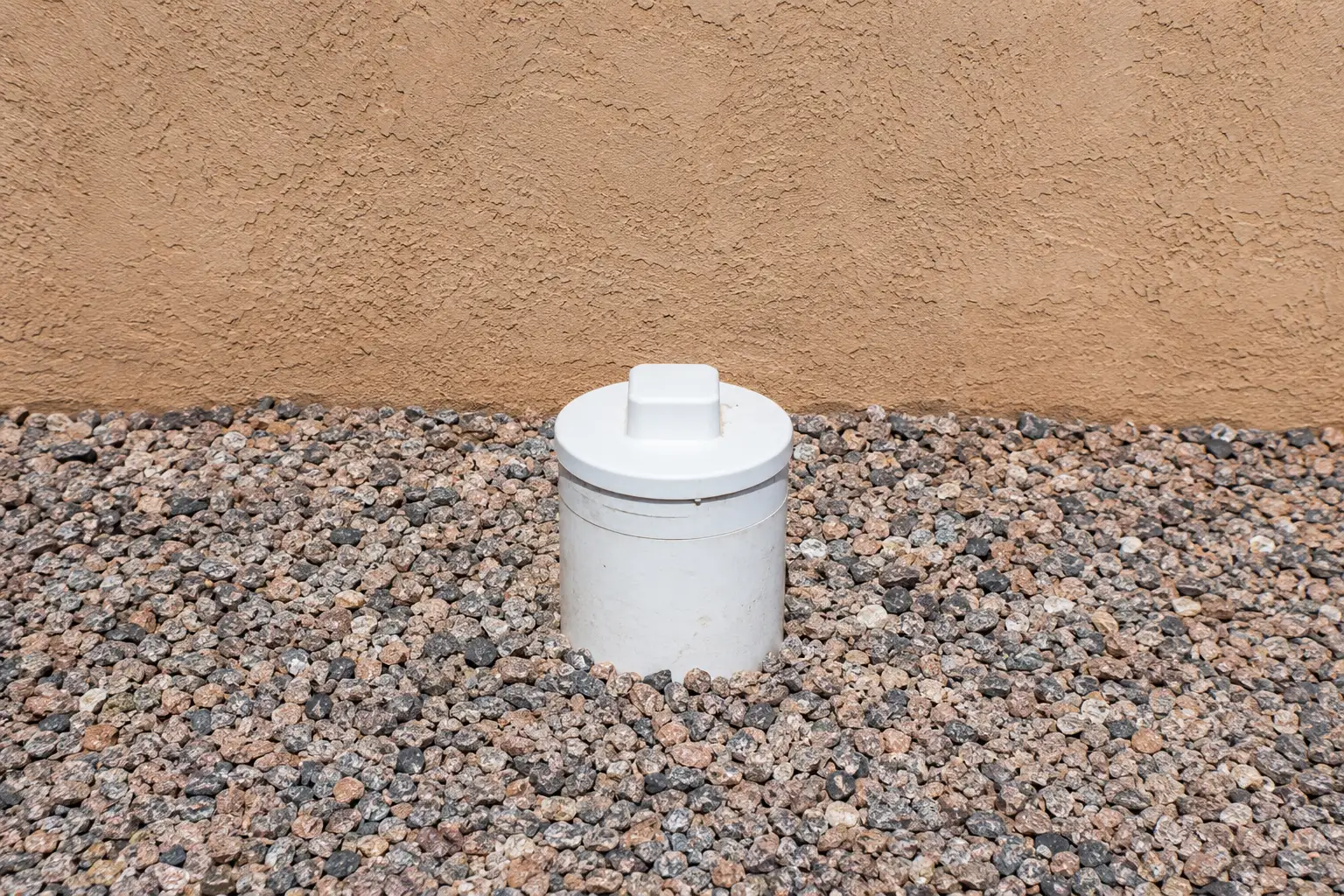
Not every leak is under your roof. The main service line between the meter and the house, outdoor faucets and irrigation lines can all leak into the yard, where the water soaks away out of sight.
- A patch of yard that stays wet or green when the rest is dry.
- Water pooling near the meter box or along the path of the line.
- Low water pressure throughout the house.
- The meter still moving after the main at the house is closed.
Outdoor faucets are also worth a look after a cold snap. A faucet split by frost inside the wall may only leak when the hose is turned on.
Leak detection questions
How do I know if I have a hidden leak?
Turn off all water use and watch the meter. If the leak indicator moves, water is going somewhere.
What does a slab leak mean?
A leak in a water line under the concrete floor. Warm spots, running water sounds and a moving meter are common signs.
Can a plumber find a leak without breaking walls?
Usually the leak is narrowed down with pressure tests, listening equipment and thermal imaging before anything is opened.
Why is my water bill higher?
A running toilet, a dripping faucet or a hidden leak are common reasons. The meter test tells you whether water is being lost.
Is a slow drip under the sink a big deal?
It can swell the cabinet floor and grow mold over time. Close the valve under the sink and have it repaired.
Does a leak always mean a big repair?
No. Many leaks are a single fitting, a supply line or a toilet flapper. Finding the exact spot first keeps the repair as small as possible.
Can a leak be in the yard?
Yes. The line between the meter and the house can leak, as can irrigation lines. A wet strip of yard is a common clue.
Will leak detection damage my floors or walls?
The aim is to find the leak first and open only the spot that needs repair. Pressure tests, listening equipment and thermal imaging all work without cutting.
How long does it take to find a leak?
Many leaks are found on the first visit. Leaks under a slab or in a long run of pipe can take longer, because each line is tested in turn.
Repairs that often follow
We take leak detection calls from homes across Prescott Valley, in the 86314 and 86315 ZIP codes. Tell us what you are seeing and a local plumber can come out.