When repairs stop making sense
Repiping in Prescott Valley means replacing the water supply lines in part or all of a house. It is a bigger job than a single repair, and it only makes sense when the pipes themselves are the problem rather than one bad fitting.
Keep repairing when
- Leaks are rare and in different, unrelated places.
- The pipes are in good condition where you can see them.
- Water pressure and color are normal.
Repiping is worth discussing when
- Leaks keep appearing in the same type of pipe.
- Hot or cold water comes out rusty or discolored.
- Pressure is weak throughout the house.
- Pipes are old galvanized steel or a type known to fail.
Signs your pipes are wearing out
Brown or rusty water
Often from galvanized steel corroding inside.
Pinhole leaks
Small leaks in copper lines, one after another.
Weak pressure everywhere
Corrosion narrowing the inside of the pipes.
Repeated slab leaks
Lines under the floor failing more than once.
Visible corrosion
Green or white crust on fittings, or rust on steel pipe.
Noisy pipes
Banging or rattling that has grown worse over time.
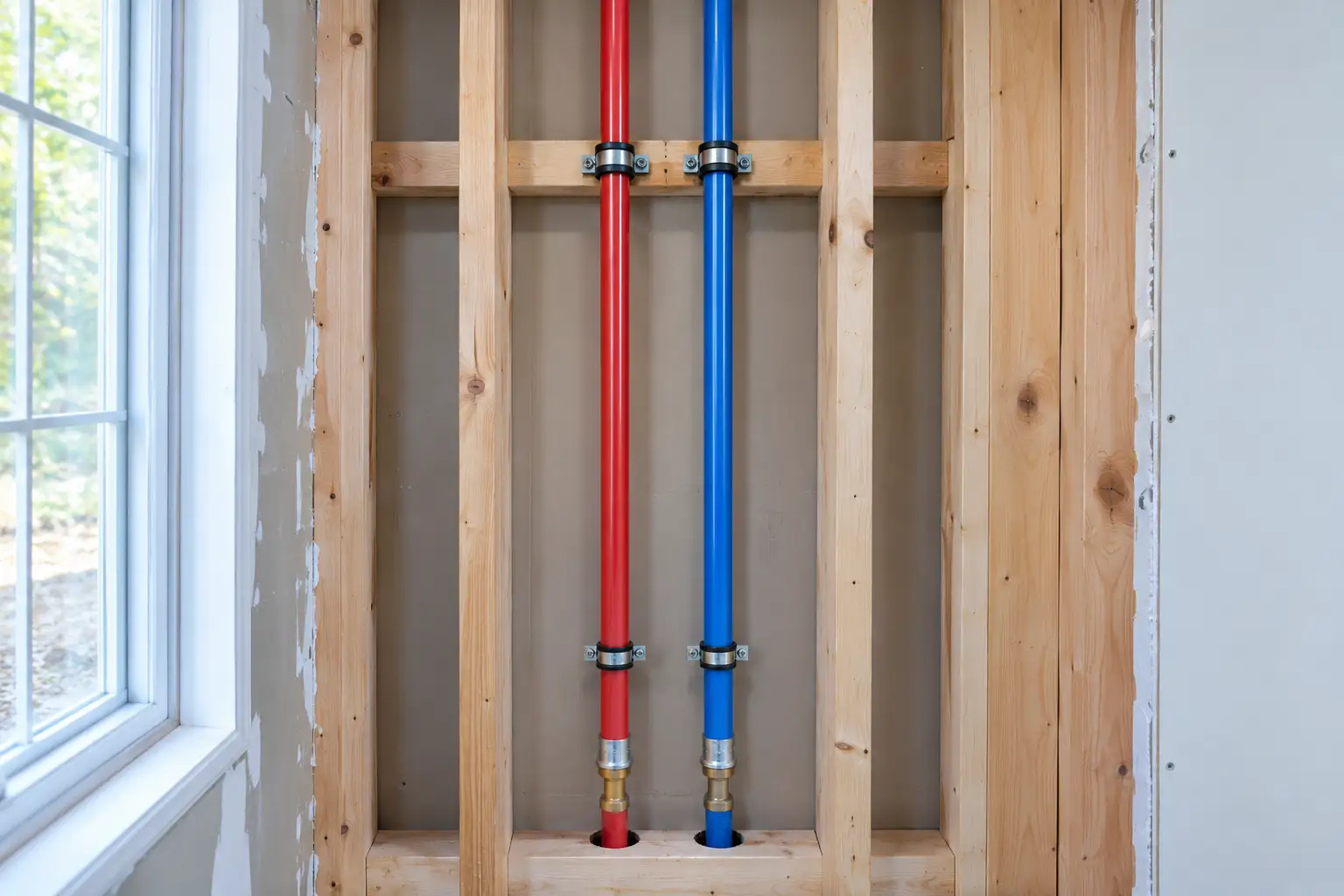
PEX or copper
Two common choices for new water lines
| Feature | PEX | Copper |
|---|---|---|
| What it is | Flexible plastic tubing | Rigid metal pipe with soldered joints |
| Installation | Fewer joints, easier to route through walls | More joints, more cutting and fitting |
| In cold snaps | Handles freezing better than rigid pipe | Can split when frozen |
| Where it shines | Most whole house repipes | Exposed runs and certain fittings |
The plumber explains which material suits your house and why, before any work starts. Many repipes use PEX for most of the runs and keep copper where pipes are exposed.
What a repipe involves
Inspection and plan
The plumber looks at the existing pipes, where they run and how to reach them, and plans the new routes.
Small openings
Drywall is opened in a few places along the new routes, not whole walls.
New lines
New supply lines are run to each fixture, often through the attic or walls rather than under the slab.
Switch over
Each fixture is moved onto the new lines and the old ones are capped off.
Test
The new system is pressure tested and every fixture is checked.
Patch
The openings are patched, ready for paint.
Water is usually only off for part of each day during the work. You will hear the plan for that before anything starts, including which rooms are worked on first and when the water will be back on each evening.
Partial or whole house
Not every house needs everything replaced, and a good plumber will not suggest more than the house needs. A partial repipe can replace just the failing lines, such as the hot water lines or a run that goes under the slab, while the rest stays in place.
Partial repipe
Replaces the lines that keep failing. Useful when one part of the system is the problem.
Whole house repipe
Replaces every supply line. Makes sense when the same pipe type is failing throughout.
Slab line rerouting
Moves lines out from under the floor to the attic or walls after slab leaks.
Partial or whole house, the plan is talked through room by room before you commit to anything.
Why some pipes wear out sooner
Prescott Valley has large swings between day and night temperatures, and frozen pipes in cold snaps are a common trigger for calls. Pipes in garages, attics and outside walls feel those swings most, and every freeze and thaw adds stress to joints and fittings.
Older galvanized steel pipe rusts from the inside, narrowing until pressure drops and the water turns brown. Some older plastic lines become brittle with age. Copper can develop pinhole leaks over time. When the same failure keeps appearing, the pipe material is usually the reason.
Questions to settle before a repipe
Which lines are failing?
All of them, or only hot water lines or one run under the slab.
Where will the new lines run?
Through the attic and walls, away from the slab where possible.
How long will water be off?
Usually part of each day, planned in advance.
What gets patched?
Which openings are made, and how they are finished.
Living at home during the work
- Clear space along the walls where the new lines will run.
- Cover furniture in rooms with openings, as there will be some dust.
- Plan around water being off for part of the day.
- Keep pets away from open walls and tools.
- Ask which rooms are being worked in each day.
Repiping questions
How do I know if I need to repipe?
Repeated leaks in the same pipe type, rusty water, weak pressure everywhere and visible corrosion are the main signs.
Do all the walls need to come down?
No. A repipe uses small openings along the new routes, which are patched afterwards.
Is PEX a good choice?
PEX is common for repipes because it is flexible, needs fewer joints and handles freezing better than rigid pipe.
Can I stay at home during a repipe?
Usually yes. Water is off for part of each day, and the plumber will plan around that with you.
What is a partial repipe?
Replacing only the lines that are failing, such as hot water lines or a run under the slab, while the sound parts of the system stay in place.
Does repiping fix slab leaks?
Rerouting lines out from under the slab stops new slab leaks on those lines.
Will repiping improve water pressure?
If corrosion inside old pipes was restricting flow, new lines usually restore normal pressure.
How long does a repipe take?
It depends on the size of the house and how many lines are replaced. The plumber gives you a plan for each day before the work starts.
Do I need a permit for repiping?
Larger plumbing jobs often need one. The plumber will know what applies to your home and the work involved.
Will new pipes change the taste of my water?
New lines can have a faint smell or taste for a short time. Running the taps for a few minutes after the work usually clears it.
Can a repipe be done in stages?
Yes. Some homeowners start with the lines that fail most, such as hot water lines, and replace the rest later.
What happens to the old pipes?
They are usually capped and left in the walls, because removing them would mean opening far more drywall.
Repairs that come before a repipe
We take repiping calls from homes across Prescott Valley, in the 86314 and 86315 ZIP codes.