What to do in a plumbing emergency, first
Whatever kind of plumbing emergency you are facing, three moves come before anything else. They stop the problem growing and keep everyone safe.
Stop the water
Close the valve closest to the problem, or the main shutoff for the whole house.
Make it safe
Switch off power to wet rooms from a dry spot, and leave the house if you smell gas.
Protect what you can
Move belongings, lift rugs and take photos before you clean up.
The sections below cover each type of emergency in turn. Find yours and follow the steps in order. If you are not sure what kind of problem you have, start with the water and the power, then work out the rest once the house is safe.
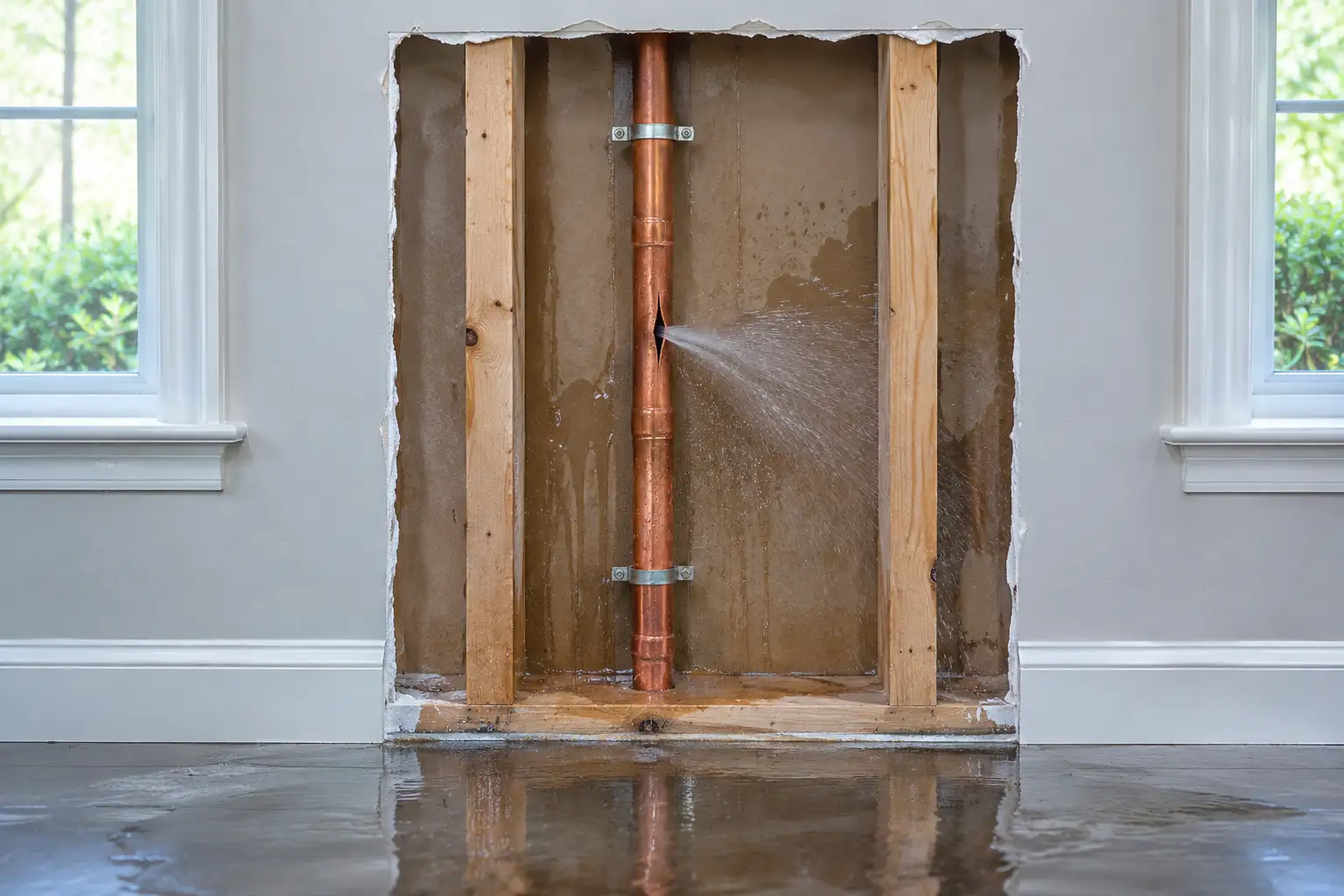
A pipe is spraying or leaking
Close the main shutoff
Usually in the garage, a utility closet or near the front hose faucet. Turn a round handle clockwise, or a lever a quarter turn.
Drain the lines
Open the lowest faucet in the house to let the remaining water out there.
Turn off power to wet rooms
Only from a dry spot. If the panel is wet, stay away from it.
Catch and mop
Buckets under drips, towels on the floor, rugs lifted and hung up.
If you cannot find or turn the main, the shutoff guide shows the other places to close the water. For what to do in the hours after, see what to do when a pipe bursts.
Sewage is coming up a drain
Sewage in a tub, a shower or a floor drain means the main line is blocked. Every drop you send down comes back up.
- Stop using every sink, toilet, shower and appliance that drains.
- Keep children and pets away from the water.
- Do not try to clear it with chemicals.
- Wear gloves and boots if you must go near it, and wash well afterwards.
- Open a window if you can reach one without walking through it.
The sewer line backup page explains how the line is cleared and checked.
A toilet will not stop rising
Close the valve behind it
A small oval or round handle on the wall or floor behind the toilet. Turn it clockwise.
No valve, or it will not turn?
Lift the tank lid and pull up the float or the fill valve arm to stop the water filling.
Do not flush again
A second flush on a clogged toilet is what sends water over the rim.
Check other drains
If the tub or a floor drain is also backing up, it is the main line, not just the toilet.
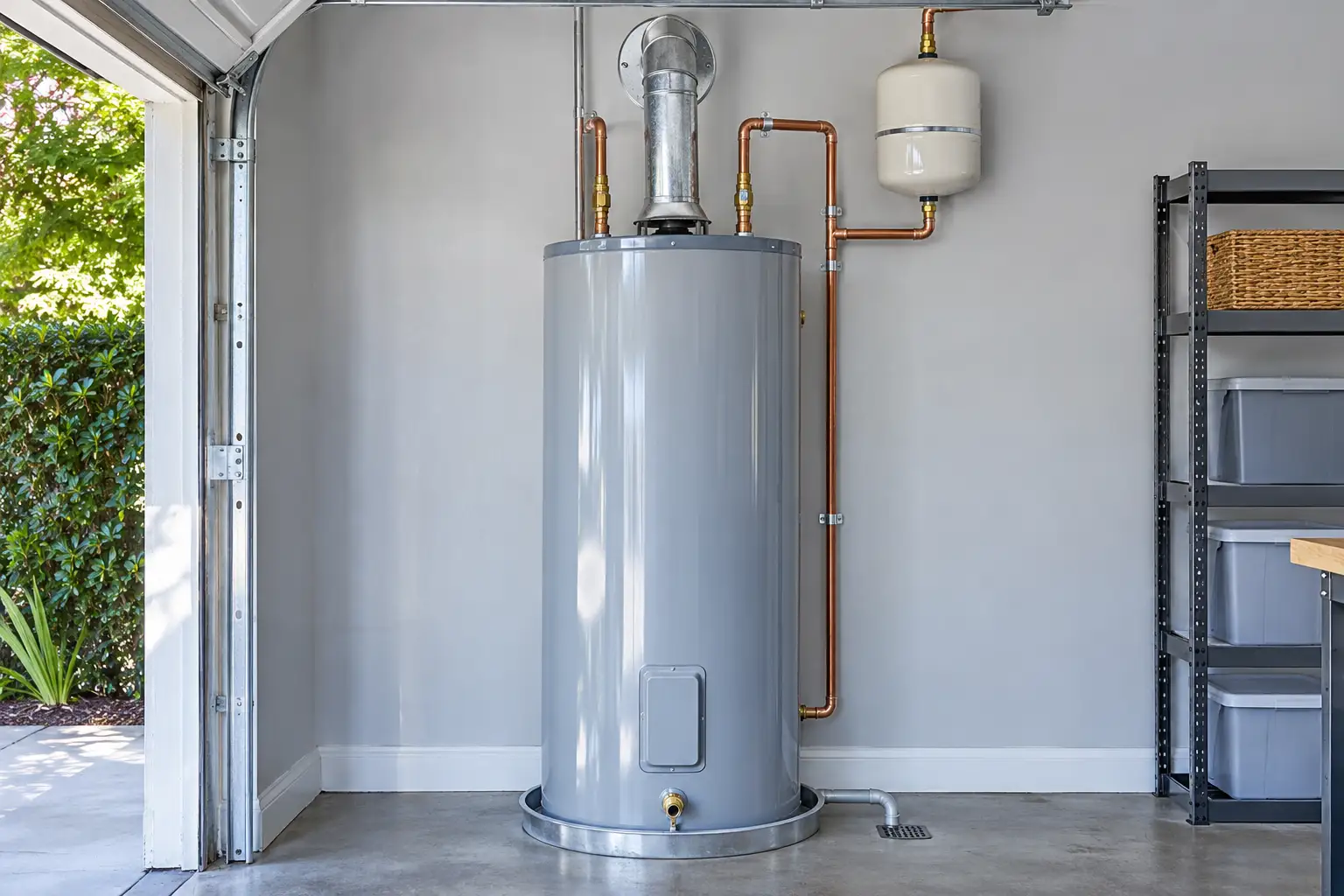
The water heater is leaking
- Shut the cold supply valve found on the line above the tank.
- Turn off the breaker for an electric heater, or set a gas heater to off or pilot.
- Keep clear of the water, which can be very hot.
- Move anything stored nearby out of the water.
Water at a pipe connection is often a simple repair. Water from the bottom of the tank usually means the tank has failed. See water heater repair.
You smell gas
Leave the house first. Call the gas company or emergency services from outside.
Do not switch lights or appliances on or off, do not use a phone inside and do not start a car in an attached garage. Do not go back in until you are told it is safe. Repairs come afterwards, and the gas line repair page explains them.
A pipe has frozen
Frozen pipes in cold snaps are a common trigger for plumbing calls in Prescott Valley. A frozen pipe has not always split yet, and careful thawing can keep it that way.
- Open the faucet the pipe feeds, so melting water has somewhere to go.
- Warm the area with a hair dryer or a space heater kept at a safe distance.
- Start near the faucet and work back toward the frozen section.
- Never use an open flame or a torch.
- If water starts spraying as it thaws, close the main straight away.
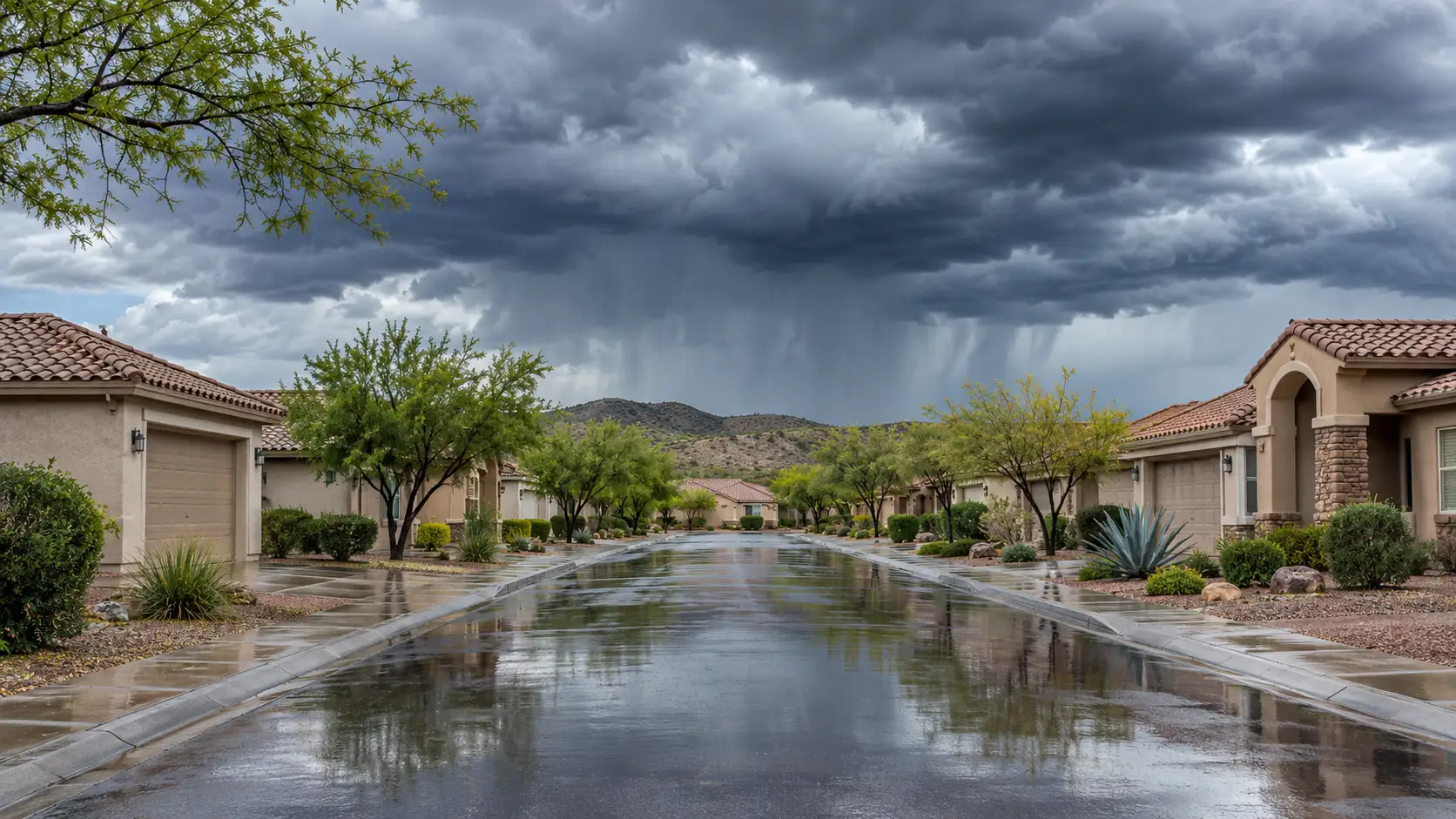
When a monsoon storm brings water in
Monsoon or flash flood storms can overwhelm drains and push water where it should not be, including under doors, through window wells and back up through floor drains.
- Clear the yard drain or gutter that is overflowing, only if it is safe to go outside.
- Put towels along the bottom of doors where water is coming in.
- Move belongings off the floor in the garage and in low rooms.
- If a floor drain is backing up during the storm, stop using water inside until it passes.
- Stay away from standing water near outlets or cords.
Once the storm has passed, check the attic, the ceilings and the base of outside walls for new damp.
Things that make an emergency worse
Walking through water near power
Turn the power off from a dry spot first, or stay out.
Chemical drain cleaners
They rarely clear a main line and make the drain dangerous to work on.
Flushing again
A clogged toilet overflows on the second flush.
Turning the main back on to check
Leave it closed until the break is repaired.
Open flames on frozen pipes
They can start a fire inside the wall.
Waiting it out
Small leaks soak into floors and walls every hour they run.
Record it, then brief the plumber
Before you clean up, take photos and short videos. They help with insurance and they remind you later exactly what happened.
- The source, such as the split pipe, the leaking tank or the backed up drain.
- Each wet room, from the doorway and then up close.
- Damaged belongings, with a simple list.
- The time you found the problem and each step you took.
When the plumber arrives
Show the plumber the source, tell them what you have already done and point out anything you noticed, such as which drains backed up or where the water first appeared. Have a clear path to the main valve, the water heater and the sewer cleanout.
You will hear what the plumber found and the ways to put it right, and the decision on what happens next stays with you.
Get ready before the next one
The best time to prepare for a plumbing emergency is on an ordinary day. These take a few minutes and make every step on this page faster.
- Find the main shutoff, tag it and check that it turns.
- Find the cold water valve on top of the water heater.
- Find the shutoff valves under each sink and behind each toilet.
- Find the gas meter and know how to get everyone outside quickly.
- Keep a flashlight, towels and a bucket where you can reach them.
What the plumber will want to know
A few details on the phone help the plumber arrive ready for the job.
| Tell us | Why it helps |
|---|---|
| What you see and where | Points to a burst line, a clog, a failed heater or a fixture. |
| When it started | Shows how much water may be in the floors and walls. |
| What you already did | Main closed, power off, heater off, so nothing is repeated. |
| Which fixtures are affected | One drain or several separates a fixture clog from the main line. |
| Your ZIP code | Confirms the address is in the area we cover. |
If you rent, tell your landlord or property manager too, in writing as well as by phone. If you share walls, let your neighbor know about any leak that could reach their side.
Small problems that can wait until morning
Not everything is an emergency. These can usually wait for a scheduled visit, as long as they are not getting worse.
A dripping faucet
Annoying and wasteful, but not urgent.
One slow drain
As long as the other drains are fine.
A toilet that runs now and then
Close its valve if the noise bothers you.
Lukewarm hot water
If the heater is not leaking and you do not smell gas.
If a small problem starts to spread, such as a drip that becomes a stream or a slow drain that starts backing up, treat it as urgent.
Emergency step questions
Where would my main shutoff be?
Usually where the water line enters the house, often in the garage, a utility closet, near the front hose faucet or on the wall facing the street. The meter box by the street has another valve.
My main valve is stuck. What else can I close?
Do not force it with a long lever, as old valves can break. Use the valve at the meter box, which closes with a meter key, or close the fixture valve nearest the leak.
Should I turn off the water heater if the main is off?
If the main will be off for a while, set the water heater to vacation or off so it does not heat an empty tank.
Is it safe to stay in the house during a leak?
With clean water and the power safe, usually yes. With sewage or a gas smell, keep away or leave.
How do I stop a toilet overflowing?
Close the valve behind it, or lift the float in the tank to stop it filling. Do not flush again.
What if water is near the electrical panel?
Stay out of the water and away from the panel. Tell the plumber when you call so the power can be made safe first.
Can I warm a frozen pipe back to life myself?
Gently, with a hair dryer or a space heater at a safe distance, and with the faucet open. Never use an open flame.
Is now the time to ring my insurer?
Many people do on the same day. Take photos first and keep notes of what you did.
What should I tell the plumber?
Where the problem started, what you have done, how long it has been happening and which fixtures are affected.
How can I prepare for next time?
Find and test the main shutoff, the water heater valve and the fixture valves, and keep a flashlight, towels and a bucket handy.
What if a ceiling is bulging with water?
Turn off the power to that room, keep everyone out from under it and put a bucket below. A small hole at the lowest point, made while standing to the side, lets the water drain in a controlled way.
Can a monsoon storm back up my drains?
Yes. Heavy rain can overwhelm yard drains and the sewer system. Stop using water inside if a floor drain starts to back up during a storm.
Is it safe to use the toilet if the main is off?
You can flush once using water poured into the bowl, but avoid it if the drains are backing up.
What should I keep in an emergency kit for plumbing?
A flashlight, towels, a bucket, gloves, a wet vacuum if you have one and the location of every shutoff written down.
Can I wait until morning for a leaking water heater?
Only if you have closed the cold valve, turned off the heat and the leak has stopped. A tank that keeps leaking needs attention sooner.
What if water is coming from a neighbor above?
Tell them and the building manager straight away so they can close their water. Protect your belongings, turn off power to wet rooms and take photos.
Do I need to call anyone besides a plumber?
For a gas smell, the gas company. For a lot of water in floors and walls, a drying company may help. For sewage that soaked carpet, a cleaning company.